


Views: 0 Author: Site Editor Publish Time: 2026-08-20 Origin: Site


Material thickness dictates operational success on the manufacturing floor. A fraction of a millimeter directly changes production efficiency, packaging integrity, and raw material usage. Selecting the wrong gauge introduces severe operational risks. Over-engineering your packaging leads to wasted material and significantly reduced yield per roll. Under-engineering causes thermoforming failures, compromised barrier properties, and product damage during transit.
You need a systematic, engineering-led framework to evaluate your application requirements against precise material specifications. Guesswork in procurement creates bottlenecks on the production line. By aligning your machinery capabilities with the exact physical properties of the plastic, you optimize cycle times and unit economics. This guide breaks down how to source the optimal material for your specific production lines, ensuring structural integrity without unnecessary material waste.
Thickness directly dictates structural rigidity, roll yield, and thermoforming cycle times; precision specification is critical for unit economics.
Application environments (e.g., cold chain storage, high-speed automated lines, direct food contact) narrow the viable thickness range.
Balancing cost per pound versus yield per roll requires calculating material density, roll weight, and establishing exact gauge requirements.
Supplier manufacturing tolerances, surface treatments, and quality control (QC) metrics are as critical to production stability as the nominal thickness itself.
Buyers operating across different global regions encounter conflicting measurement standards daily. North American manufacturers typically specify thickness in mils or gauge. European and Asian suppliers use microns. Misinterpreting these units leads to catastrophic procurement errors, resulting in material that either jams your machines or fails quality control drop tests. You must establish a clear conversion framework before issuing any purchase orders.
To standardize your internal specifications, follow these baseline conversion rules:
One mil equals one-thousandth of an inch (0.001 inches).
One mil also equals exactly 25.4 microns.
Gauge is simply the mil measurement multiplied by 100 (e.g., 10 mil = 1000 gauge).
Use the reference table below to align your engineering team with your procurement department.
Microns (µm) | Mils | Gauge | Common Application Category |
|---|---|---|---|
150 | 6.0 | 600 | Thin-Gauge / Flexible Films |
250 | 10.0 | 1000 | Thin to Medium Transition |
350 | 13.8 | 1380 | Medium-Gauge / Standard Clamshells |
500 | 20.0 | 2000 | Medium to Heavy Transition |
750 | 30.0 | 3000 | Heavy-Gauge / Industrial Trays |
1000 | 40.0 | 4000 | Ultra-Heavy / Structural Inserts |
Thickness determines the mathematical relationship between density and yield. Polyethylene terephthalate has a standard density of approximately 1.33 g/cm³. When you specify a thicker PET Roll, the total linear footage decreases proportionally for a given roll diameter. This reduction in linear footage directly impacts your changeover frequency. Operators must swap rolls more often, increasing machine downtime and requiring more frequent threading of the web through the thermoformer.
You must calculate exact roll weight to manage logistics and machine handling limits. Roll weight equals width multiplied by linear length, multiplied by thickness, multiplied by material density. Thicker materials increase shipping weights per linear foot. Optimizing thickness maximizes the number of formed units you extract from a single roll. If you reduce your gauge by just 5% without compromising structural integrity, you instantly increase your yield per roll by the same margin.
Frame your baseline requirement accurately. The ideal thickness is the absolute minimum gauge necessary to achieve structural integrity. You must not compromise the barrier properties, impact resistance, or optical clarity of the final package. Over-specifying thickness adds unnecessary weight. Under-specifying compromises the physical barrier.
To validate your success criteria on the factory floor, implement these testing protocols:
Compression Testing: Measure the top-load crush resistance of the formed empty container to ensure it survives pallet stacking.
Drop Testing: Fill the container with the intended product and drop it from standard transit heights to check for corner cracking.
Denesting Verification: Ensure the formed trays separate cleanly on automated filling lines without sticking together due to static or vacuum lock.
Thin-gauge materials dominate high-volume, disposable applications. Primary use cases include flexible packaging, lightweight blister packs, window films, and lamination substrates. These applications demand high optical clarity and minimal structural load-bearing capacity. The material acts primarily as a dust cover or a tamper-evident seal rather than a structural support.
The performance trade-offs heavily favor production speed. Thin materials offer exceptionally high yield per roll. They require significantly faster thermoforming heating cycles because less thermal energy is needed to penetrate the core of the plastic. However, you sacrifice structural rigidity and impact resistance. Thin packages crush easily under heavy stacking loads and offer minimal puncture resistance against sharp contents.
You must mitigate specific production risks when running thin materials. They are highly prone to webbing, wrinkling, or tearing on high-speed automated lines. Specify strict tension control requirements for your unwinding equipment. Precise web handling, utilizing dancer rollers and closed-loop tension controllers, prevents stretching or snapping the material before it reaches the heating platens.
Medium-gauge materials serve as the industry standard for retail packaging. Primary use cases include fresh food packaging, standard clamshells, ready-to-eat trays, and retail display packaging. This range supports moderate physical loads while maintaining excellent transparency, allowing consumers to inspect the product inside.
This thickness provides the optimal balance of impact resistance, visual clarity, and structural integrity. It is ideal for products requiring visual freshness on the shelf. Medium-gauge materials maintain cold or chilled display stability without becoming overly brittle in refrigerated environments. They provide enough rigidity to incorporate complex design features like hinge mechanisms, button snaps, and denesting lugs.
Address the risk of thermal distortion during processing. You need absolute uniform thickness across the web to prevent warping during the cooling phase of thermoforming. Inconsistent cooling rates cause the formed trays to twist or bow. Uniform gauge maintains high clarity and ensures the final package snaps closed securely on automated packing lines.
Heavy-gauge materials handle demanding physical environments. Primary use cases include heavy-duty industrial trays, electronic component packaging, medical device trays, and structural inserts. These applications require absolute dimensional stability, puncture resistance, and the ability to hold heavy metal or electronic parts securely in place during global transit.
The performance trade-offs shift entirely toward durability. You gain maximum load-bearing capacity and impact protection. However, you face a significantly lower yield per roll. The sheer volume of plastic resin required means fewer parts per roll, leading to more frequent material changeovers and higher scrap volumes from the skeleton web.
You must mitigate processing challenges on the factory floor. A heavy PET Sheet Roll requires modified heating profiles. Extended cycle times on thermoforming equipment are mandatory. You must ensure thorough core heating without causing surface degradation, blistering, or a loss of transparency. If the core remains cold while the surface overheats, the material will shatter during the forming process.
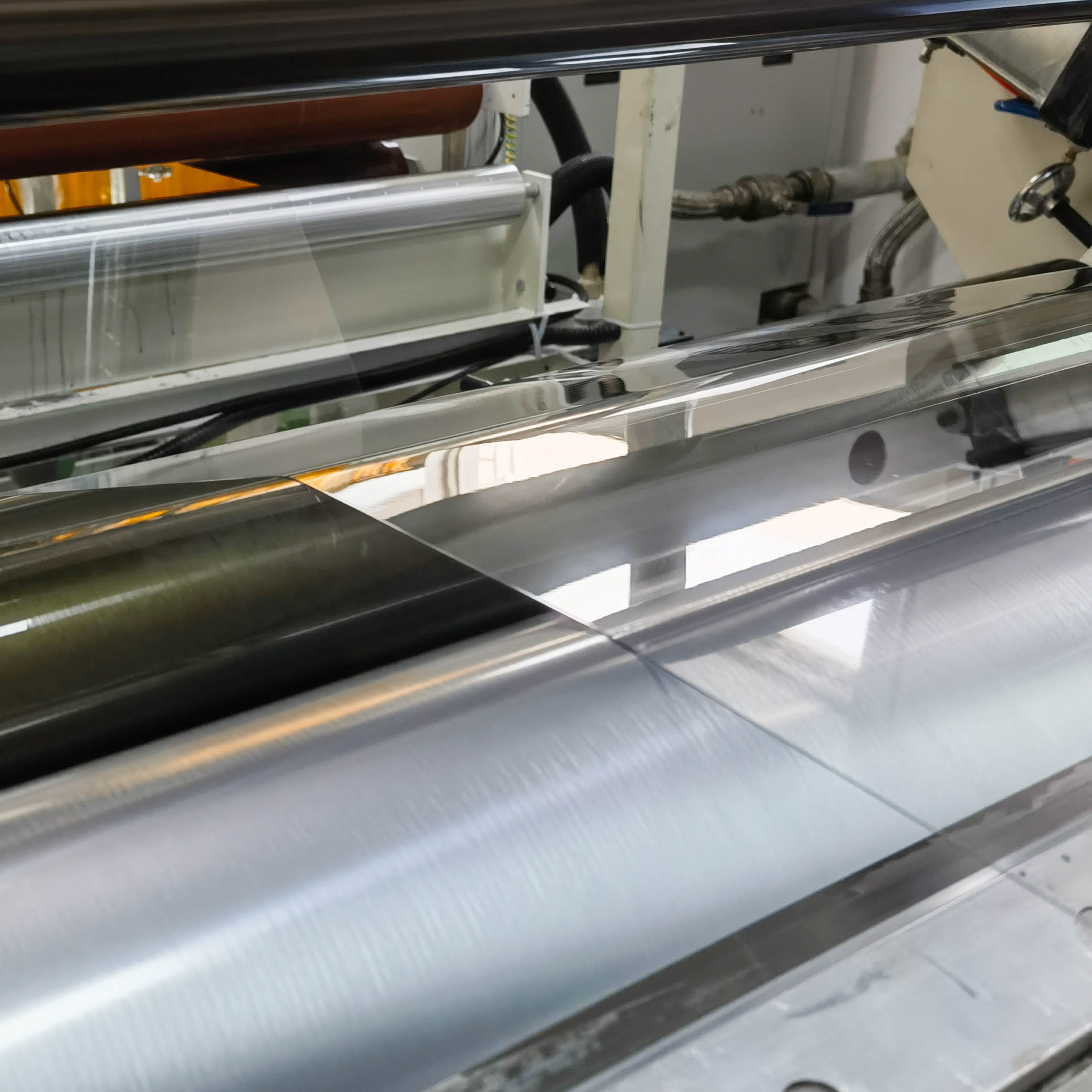
Thermal dynamics dictate your production speed. Polyethylene terephthalate absorbs heat at a specific rate. Thicker gauges require exponentially longer dwell times in the heating oven. If you push a thick sheet through too fast, the core remains cold while the surface overheats. This causes internal stress, poor material distribution, and forming failures.
Higher wattage heaters or longer oven lengths become necessary for heavy gauges. Top and bottom oven banks must be independently controlled to manage sheet sag. As thick material heats up, its weight causes it to droop between the chain rails. If your equipment lacks adequate heating zones or photoelectric sag sensors, thick materials will bottleneck your high-speed thermoforming lines. You must calibrate the oven profile to match the exact thermal mass of the specified thickness.
Material thickness directly impacts mold shrinkage rates. Thicker plastics retain heat longer, altering how they shrink as they cool on the aluminum tool. Your draft angles must accommodate the specific gauge to allow for clean part ejection without scuffing the side walls. Inadequate cooling channels in the mold will cause thick parts to warp after ejection.
The definition of formed corners changes with thickness. Heavy materials resist flowing into tight radii. Thicker materials require specific plug-assist techniques for deep-draw applications. Syntactic foam plugs force the heated plastic into the mold cavity, preventing the material from thinning out excessively at the bottom corners of the tray. Without plug assist, a thick sheet will stretch unevenly, leaving the bottom of the tray dangerously thin.
Gauge heavily impacts your downstream cutting equipment. Heavy-gauge materials accelerate steel-rule blade wear. A thicker cross-section requires more physical force to shear cleanly without leaving angel hair, jagged edges, or plastic dust on the finished parts.
You need higher tonnage presses to punch through thick sheets consistently. Pushing a low-tonnage press beyond its limits causes incomplete cuts and machine fatigue. This impacts your maintenance schedules and increases tooling replacement costs. You must also adjust the shore hardness of the ejection rubber on your cutting dies. Harder rubber is required to push thick skeleton scrap off the blades after the cut.
Die-Cutting Issue | Probable Cause Related to Thickness | Corrective Action |
|---|---|---|
Angel Hair / Fluff | Blades dulling rapidly from heavy-gauge material. | Switch to double-bevel blades; increase cutting plate heat. |
Incomplete Cuts | Insufficient press tonnage for the specified gauge. | Reduce the number of cavities per hit or increase press tonnage. |
Shattered Edges | Material is too thick and brittle at ambient temperature. | Apply localized heat to the cutting plate; check for over-packing. |
Web Jamming | Ejection rubber is too soft to push thick scrap away. | Upgrade to high-density, higher shore hardness ejection rubber. |
Surface treatments alter material handling characteristics. Anti-fog, silicone, and anti-static coatings prevent condensation, allow for easy denesting, and repel dust. Corona treatments increase surface tension (measured in dyne levels) to improve ink adhesion. You must evaluate how these coatings interact with different thicknesses on your specific machinery.
Surface treatments marginally affect the overall caliper and slip coefficient of the material. A heavy silicone coating applied to a thin-gauge sheet makes it extremely slippery. This requires specific tension handling adjustments on the unwinder to prevent the roll from telescoping during operation. Conversely, a lack of silicone on a heavy-gauge roll can cause the web to bind and jerk as it unwinds.
The choice between matte and gloss finishes impacts visual presentation and scuff resistance. Material thickness impacts print registration accuracy. When running material through a flexographic or digital press, the gauge determines how the web stretches under tension.
Thinner gauges require highly sensitive web tension control during printing. If the tension is too high, the material stretches, throwing the color registration out of alignment and causing blurry graphics. Thicker gauges provide better structural stability. They resist stretching, making them superior for complex, multi-color post-thermoforming decoration or heavy adhesive labeling.
Metallized films provide enhanced barrier protection. The thin layer of aluminum deposited on the surface drastically reduces light, oxygen, and moisture transmission. This is critical for extending the shelf life of sensitive products.
Metallization allows for a slight reduction in base thickness. Because the aluminum layer provides the functional barrier, you can specify a thinner base film while maintaining superior oxygen transmission rates (OTR) and moisture vapor transmission rates (MVTR). This reduces overall roll weight and improves yield without compromising the integrity of the package.
Thickness impacts chemical migration rates for food contact applications. Regulatory bodies dictate acceptable migration limits based on the volume of food and the surface area of the packaging. Thicker materials have a larger mass of plastic that could potentially interact with the food product under high heat or acidic conditions.
Any material used for food packaging must maintain compliance across its entire thickness profile. This is especially critical when utilizing A-B-A co-extrusion structures with post-consumer recycled (rPET) inner layers. The virgin outer layers (the "A" layers) must be thick enough to act as a functional barrier, preventing any trace contaminants in the rPET core from migrating into the food.
Vague requests generate inaccurate pricing and incorrect material deliveries. Instruct your procurement team on the exact parameters to provide before requesting a quote. State the target thickness in both local and metric units to avoid confusion. Specify the exact roll width and sheet size required for your machinery.
Define your acceptable tolerance requirements explicitly. Detail the specific end-use application. State clearly if the material requires food contact certification, cold chain stability, or specific anti-static properties. A comprehensive RFQ forces suppliers to quote the exact specification, eliminating hidden costs and production failures later.
Target Gauge: Specify in microns and mils.
Roll Dimensions: Exact width, maximum outer diameter (OD), and core inside diameter (ID).
Surface Treatment: Specify silicone levels, anti-fog requirements, or corona treatment dyne levels.
Compliance: State required certifications (e.g., FDA direct food contact, REACH, RoHS).
Perfectly uniform plastic does not exist. You must define industry-standard thickness tolerances. A standard acceptable variance is ±5% of the nominal gauge. Tighter tolerances, such as ±3%, exist for high-precision medical packaging but command a premium price.
Understand the production risks of poor tolerance control. Thin spots across the web (cross-web profile variation) cause barrier failure and weak points in the formed tray. Thick spots in the machine direction cause incomplete forming, visual distortion, and jamming in the die-cutting station. Demand statistical process control (SPC) data from your supplier to verify their extrusion consistency.
Physical dimensions matter as much as material properties. Align roll dimensions with your specific unwinding equipment. Specify the exact core inside diameter (ID), typically 3 inches or 6 inches, to match your pneumatic air chucks. Using the wrong core size means the roll cannot be mounted on the machine.
Discuss the limitations of maximum roll weight and outer diameter (OD) based on your facility handling capabilities. If a supplier ships a roll that exceeds your forklift capacity or the OD limits of your unwinder, the material is useless. Specify maximum weight and OD limits on every single purchase order to prevent receiving unmanageable inventory.
Never commit to a bulk order based solely on a specification sheet. Execute a strict prototyping phase. Request comprehensive Technical Data Sheets (TDS) for the exact formulation you intend to buy. Verify the dimensional stability, intrinsic viscosity, and shrinkage rates listed on the TDS.
Run a pilot test on the actual production equipment. Process a sample roll through your thermoformer, die-cutter, and packaging line. Evaluate the heating cycle times, forming definition, and cutting cleanly. Check the denesting capabilities of the formed parts. Only authorize bulk procurement after the sample roll passes all internal quality control checks on the factory floor.
Selecting the right thickness is a calculated balance. You must weigh the mechanical product requirements against your production line thermal capabilities. Surface finish needs and target unit economics dictate the final specification. Ignoring any of these variables results in material waste, machine downtime, or compromised product safety.
Apply a strict shortlisting logic. Start with the minimum viable rigidity required for your product to survive transit. Factor in your specific thermoforming speed limits and heating capacities. Calculate the exact yield and roll weight to determine the true cost per formed unit, rather than just the cost per pound of raw resin.
Take immediate action to optimize your material specifications:
Audit your current packaging fail rates to determine if your current gauge is over-engineered or under-performing.
Structure a comprehensive RFQ with specific TDS documentation requests and strict ±5% tolerance limits.
Order sample rolls of varying thicknesses and run pilot tests to identify the exact thermal limits of your thermoforming equipment.
Calculate the yield difference between your current thickness and a 5% gauge reduction to evaluate potential material savings.
A: Standard thickness ranges from 250 to 500 microns (10 to 20 mils) for fresh food applications. This range provides the necessary structural rigidity for clamshells and trays while maintaining high optical clarity for retail display. The exact gauge depends on the weight of the food and pallet stacking requirements.
A: Roll weight is calculated by multiplying the width, length, thickness, and material density (approximately 1.33 g/cm³). Yield is determined by dividing the total area of the roll by its weight. Thicker gauges decrease the total linear footage per roll, reducing the yield per pound of material.
A: If the material exceeds your machine's thermal capacity, the core will not reach the required forming temperature. This results in incomplete draws, webbing, and high internal stress. It forces operators to slow down cycle times drastically, creating a severe production bottleneck.
A: Thicker materials can exhibit slight hazing if not cooled uniformly during extrusion. For printability, thicker gauges provide better web stability and resist stretching under tension, ensuring tighter color registration on printing presses compared to thin, highly flexible films.
A: The industry standard tolerance is ±5% of the nominal thickness. High-precision applications require ±3%. Variances beyond 5% cause inconsistent heating during thermoforming, leading to thin spots in the final package and potential jamming in downstream die-cutting equipment.
A: Not always. Cold chain environments make plastic more brittle. While medium-gauge materials often work for both, you may need to specify a slightly thicker gauge or a specific impact-modified formulation for freezer applications to prevent cracking during cold transit and handling.
A: Surface treatments do not significantly change the base thickness, but heavy coatings like silicone alter the slip coefficient. This affects how the material winds and unwinds. You must adjust web tension controls to handle treated materials without stretching or telescoping the roll on the machine.


