


Views: 0 Author: Site Editor Publish Time: 2026-08-23 Origin: Site


Packaging engineers face a constant battle: balancing processing efficiency and defect rates against strict recyclability standards. You need high-clarity, rigid packaging that runs flawlessly on the line without generating excessive scrap. Selecting the wrong polymer substrate directly causes high scrap rates, compromised barrier protection, and downstream recycling rejection. When you load a roll onto the unwind stand, it must behave predictably under thermal stress, match your existing tooling, and align with current circular economy mandates. We evaluate material behavior from the oven to the trim station. You have to know exactly how a PET Roll reacts to heat, how it distributes in a deep-draw mold, and what surface treatments prevent denesting jams on high-speed filling lines. Getting the specification right prevents line stoppages and ensures the final package meets both structural demands and environmental compliance.
Thermal Processing Realities: Standard PET requires precise temperature control during thermoforming to prevent crystallization (hazing) and manage web sag.
Tooling and Molding Compatibility: PET excels in vacuum, pressure, and plug-assist molding, but requires specific draft angles and temperature-controlled aluminum tooling for optimal heat transfer.
Sustainability Imperative: Designing thermoformed PET packaging in alignment with APR (Association of Plastic Recyclers) guidelines is critical for compatibility with the existing PET recycling stream.
Material Trade-offs: While standard PET offers superior rigidity and clarity, variants like PETG may be required if Radio Frequency (RF) sealing is a non-negotiable production step.
Automation Readiness: Specifying the correct surface treatments (like silicone coatings) on the roll is essential for denesting efficiency on high-speed filling lines.
Polyethylene terephthalate (PET) relies on an amorphous structure achieved through rapid cooling during the extrusion process. This structure delivers the glass-like clarity required for retail visibility. You want consumers to see the product clearly without relying on secondary display windows. High-quality PET achieves light transmission rates exceeding 88% and haze levels below 2%, making it visually indistinguishable from glass on the shelf.
PET provides a massive rigidity-to-weight ratio. High tensile strength allows you to down-gauge the sheet aggressively. Moving from a 0.030" to a 0.025" gauge reduces material consumption by nearly 17% while maintaining the structural integrity required for pallet stacking and transit. The material resists crushing and deformation under top-load pressure.
Impact resistance shifts based on ambient temperature. In standard retail environments, PET absorbs shocks and resists shattering when dropped. For cold-chain logistics, standard PET becomes brittle at sub-zero temperatures. You must specify impact-modified formulations or co-extruded structures if the trays will endure deep-freeze storage, ensuring the flange does not crack during handling.
Polymer selection dictates the shelf life of the enclosed product. PET delivers strong barrier properties, specifically low Moisture Vapor Transmission Rates (MVTR) and Oxygen Transmission Rates (OTR). A low OTR (typically around 3-5 cc/m2/day) blocks oxygen ingress, preventing lipid oxidation and food spoilage. A low MVTR stabilizes internal moisture, keeping dry goods crisp and medical swabs moist over extended storage periods.
Compared to Polystyrene (PS), PET provides vastly superior gas barriers. PS is highly permeable and fails completely in modified atmosphere packaging (MAP) applications. Standard PET holds the injected gas mixture inside the tray, extending the shelf life of fresh proteins and pastas by weeks.
Standard PET has strict thermal limits. You cannot run it through high-heat autoclaving; the heat exceeds its glass transition temperature (around 165°F), causing severe warping and shrinkage. For medical devices requiring sterilization, PET works perfectly with Gamma irradiation and Ethylene Oxide (EtO) cold sterilization methods. These processes maintain the package's structural integrity and optical clarity without degrading the polymer chains.
Bare polymer sheets cause massive headaches on automated packaging lines. PET has a naturally high coefficient of friction. Thermoformed trays stack tightly and lock together, preventing automated denesters from pulling them apart efficiently.
Extruders apply surface treatments to the web to fix this friction issue. They use internal anti-block additives or run the sheet through a light silicone bath before winding. These treatments alter the surface tension of the plastic, kill static build-up, and reduce surface-to-surface drag.
Properly treated trays denest flawlessly. A high-speed filling line pulling 200 trays per minute requires exact silicone coating weights. Too little coating causes the denester to pull double trays, leading to jams and line stoppages. Too much coating transfers to the tray flange and ruins the heat seal when applying lidding films, resulting in leakers and compromised barriers.
Thermoforming requires aggressive and precise thermal management. The forming temperature window for PET sits tightly between 250°F and 290°F. Within this range, the material hits ideal pliability, stretching into deep mold cavities without tearing or webbing.
Cycle efficiency depends entirely on sheet gauge and heating dwell time. A 0.040" sheet needs significantly more oven time for the core to reach forming temperature than a 0.015" sheet. Speeding up the index without adjusting oven output scorches the surface while leaving the core stiff. You must rely on accurate PID controllers and thermocouple feedback to monitor web temperature.
PET's thermal conductivity demands strategic oven zoning. You use multi-zone ceramic or quartz heaters to build a specific heat profile across the web. The sheet edges need more heat to fight the heat sink effect from the cold chain rails gripping the plastic. Uniform heat distribution prevents blowouts and thin spots at the forming station.
The molding method dictates material distribution. Vacuum forming pulls the heated sheet into a female cavity using negative pressure. It works well for shallow parts but thins out the bottom corners on deeper draws.
Positive pressure forming pushes compressed air (typically 60-80 PSI) from the top, forcing the material into the mold. This captures fine details and sharp radii. For deep-draw packaging, you need mechanical plug-assists. Syntactic foam plugs push the heated material down into the cavity before the vacuum or pressure engages. This pre-stretching prevents base and corner thinning, holding uniform wall thickness throughout the part.
Temperature-controlled aluminum molds are mandatory for PET. Aluminum transfers heat rapidly. Water channels running 50°F water through the mold cool the plastic instantly upon contact. This locks in dimensional stability. Hot molds cause post-mold warpage and shrinkage. Cold molds prevent the material from capturing the mold details fully.
Packaging requires a hermetic seal to protect the contents. You seal standard PET trays using heat, pressure, and a compatible lidding film. The tray flange must remain perfectly flat and free of silicone pooling. You dial in temperature, pressure, and dwell time to bond the film without melting or distorting the flange.
Standard PET fails at Radio Frequency (RF) sealing. RF sealing uses high-frequency electromagnetic energy to fuse polymer layers together. Standard APET resists RF energy. Trying to RF seal it causes weak bonds, electrical arcing, and severe clouding around the seal perimeter.
If your design requires RF sealing, you must drop standard PET and use alternative formulations. Catching this constraint early in the engineering phase saves thousands of dollars in wasted tooling and rejected production runs.
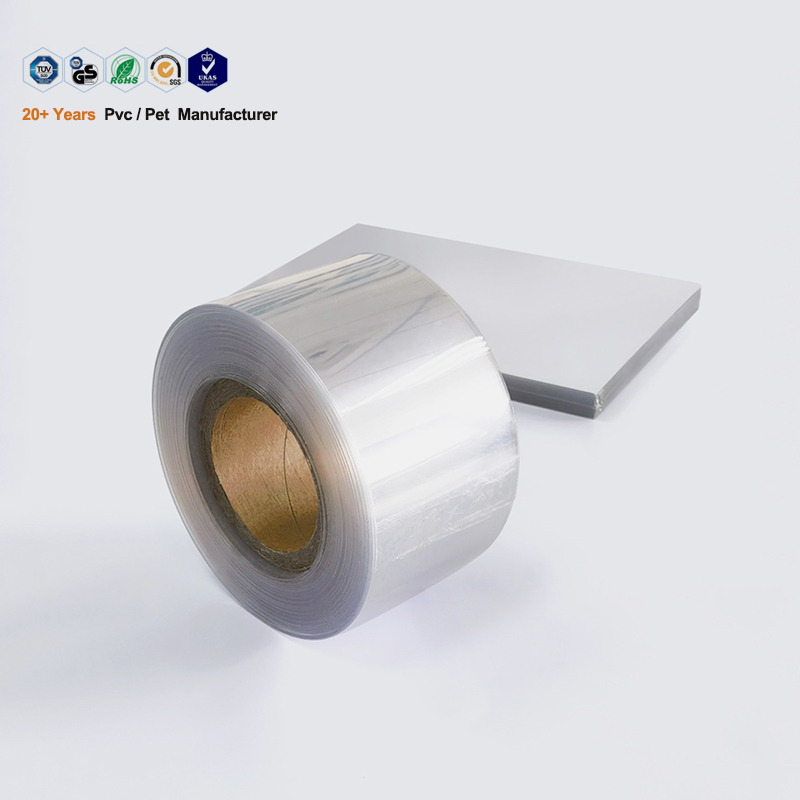
Standard Amorphous PET (APET) dominates the rigid packaging industry. Use it when you need high clarity, high rigidity, and standard closure mechanisms. Specify APET for retail blister packs, clamshells, food containers, and standard medical device trays.
APET handles friction-fit closures (like snap-shut clamshells) and traditional heat sealing perfectly. Its rigidity provides massive stacking strength for retail displays, preventing crushed product. Using standard thermoforming processes, APET delivers the best balance of performance, cost, and recyclability.
When APET fails your requirements, PETG (Polyethylene Terephthalate Glycol) steps in. Glycol modification lowers the polymer's melting point and stops crystallization. PETG stays clear even under prolonged heat exposure.
PETG dominates RF sealing applications. It absorbs RF energy efficiently, creating tear-resistant seals without burning or clouding. It also thermoforms easier in complex, deep-draw molds. It flows at lower temperatures and resists webbing in tight corners.
The trade-offs are real. PETG costs more than APET. Its lower melting point contaminates standard APET recycling streams, making it a liability for brands with strict circular economy goals.
Comparing a Thermoforming PET Roll against legacy polymers shows why it leads the market.
PET destroys Polyvinyl Chloride (PVC) in environmental metrics. PVC emits toxic chlorine gas when burned and resists recycling. Global mandates and retailer scorecards are phasing PVC out entirely. PET matches PVC's clarity and forming ease without the toxic baggage.
High-Density Polyethylene (HDPE) is opaque, flexible, and chemically resistant. It works perfectly for industrial chemical jugs or opaque dairy tubs. It fails where clarity and rigidity matter. If you need retail visibility and a premium look, PET beats HDPE every time.
Material | Optical Clarity | Rigidity | RF Sealing Compatibility | Recyclability Profile |
|---|---|---|---|---|
Standard PET (APET) | Excellent | High | Poor | Excellent (Widely Accepted) |
PETG | Excellent | Medium-High | Excellent | Poor (Contaminates APET stream) |
PVC | Excellent | High | Excellent | Very Poor (Phase-out ongoing) |
HDPE | Opaque | Low (Flexible) | Poor | Excellent (Separate stream) |
Thermoformed packaging must fit existing recycling infrastructure. The Association of Plastic Recyclers (APR) sets strict design guidelines. Your PET thermoforms must process alongside the massive PET bottle recycling stream without causing contamination.
Labels, adhesives, and inks dictate compatibility. A heavy paper label with non-water-soluble adhesive ruins the recycling wash process. The paper pulp and glue stick to the PET flakes, destroying the batch. You must specify wash-away adhesives and compatible label substrates like BOPP. These separate cleanly from the PET during the hot wash phase of recycling.
Integrating Post-Consumer Recycled (RPET) content meets corporate sustainability targets. You will see performance differences between virgin PET and high-content RPET rolls.
Recycled content introduces color variations. High-content RPET rolls show a slight yellow or gray tint from mixed feedstocks. It maintains structural integrity but drops the aesthetic clarity premium brands demand. You must also ensure the RPET carries an FDA Letter of No Objection (LNO) if used for direct food contact.
RPET suffers from Intrinsic Viscosity (IV) drops. Melting and reprocessing PET shortens polymer chains, lowering IV. Lower IV makes the sheet brittle. Suppliers fix this by blending virgin resin or using solid-state polymerization to rebuild the IV, keeping the roll impact-resistant for the thermoforming process.
Physical dimensions dictate line efficiency. You must specify core size, maximum Outside Diameter (OD), and web width tolerances accurately.
Standard cores run 3 inches or 6 inches. The thermoformer's unwind stand dictates maximum OD. If you order a 40-inch OD roll for a 30-inch unwind stand, you cannot load it. Web width tolerances are critical. Narrow rolls slip out of the chain rails and drop in the oven. Wide rolls buckle and jam the rails as they enter the heating tunnel.
Mismatching specifications causes immediate bottlenecks, material damage, and downtime while you wait for replacement stock to arrive.
PET is highly hygroscopic. It absorbs moisture from the air. You must use climate-controlled storage. Moisture trapped in the roll turns to steam in the thermoforming oven.
Bringing a cold roll into a warm production environment causes surface condensation. This moisture creates pitting, bubbling, and hazing during heating. Store rolls in a dry warehouse with controlled relative humidity. Let them acclimate to the production floor temperature for 24 to 48 hours before running to prevent condensation from forming on the web.
Web sag happens when heated plastic droops between the chain rails. Excessive sag drags the material on lower oven heaters, scorching it and risking a fire. Overheating the web center or running inconsistent gauge causes this.
Optimize your oven zones. Lower the center heat and increase edge heat to hold tension. Install sag bands or support wires to physically catch the sheet. Optimize index lengths to move material through the oven faster. Demand tight-tolerance gauge consistency from your supplier to ensure even heating and predictable sag behavior.
Standard PET is naturally crystalline. It stays clear only when heated and cooled rapidly. Cold crystallization happens when PET sits under heat without forming and cooling. It turns milky and hazy, destroying optical clarity.
You need strict process controls. Tune the line for rapid heating, immediate forming, and aggressive mold cooling. If the line stops, the sheet in the oven crystallizes. Run water chillers at full capacity to pull heat out of the plastic the second it hits the aluminum mold.
PET shrinks. You must calculate specific shrinkage rates (typically 0.002 to 0.006 in/in) into the mold design. Incorrect shrinkage calculations mean the trimmed part will not fit the product or the lidding film will not align with the flange.
Trimming PET requires heated, high-quality steel rule dies or matched metal punch tooling. Cold or dull dies shatter the material. They produce "angel hair"—fine plastic strands that contaminate the packaging line and the sealed product. Sharp, heated tooling guarantees clean edges and prevents flaking.
Request detailed Technical Data Sheets (TDS) from suppliers to verify MVTR, OTR, and impact resistance metrics before issuing a purchase order.
Secure sample rolls to conduct pilot line testing, specifically evaluating web sag behavior and denesting efficiency at full production speeds.
Verify that your existing mold draft angles and trim tooling are compatible with PET shrinkage rates to avoid costly tooling modifications.
Audit your packaging design against current APR guidelines to ensure the final product uses wash-away adhesives and compatible labels for the PET recycling stream.
A: The ideal forming temperature for standard PET ranges between 250°F and 290°F. Operating within this window ensures the material is pliable enough for deep draws. Exceeding this temperature significantly increases the risk of cold crystallization, causing the plastic to turn hazy or milky white.
A: Standard APET does not react well to Radio Frequency sealing. Attempting to RF seal standard PET results in weak bonds, arcing, or severe clouding around the seal area. If RF sealing is mandatory, PETG is the necessary alternative due to its glycol modification.
A: Material gauge directly dictates heat penetration time. A thicker sheet requires a longer dwell time in the oven for the core to reach forming temperature, slowing down the overall cycle time. Thicker materials also demand more aggressive cooling in the mold to lock in dimensional stability.
A: A light silicone coating or anti-block additive reduces the surface friction of the plastic. This prevents static build-up and ensures that stacked, thermoformed trays denest smoothly on automated, high-speed filling lines without jamming the machinery.
A: High percentages of Post-Consumer Recycled (RPET) content introduce slight color variations, often appearing as a faint yellow or gray tint. While it maintains structural integrity, the mixed nature of recycled feedstock slightly reduces the pristine glass-like clarity found in virgin PET.
A: Web sag is primarily caused by overheating the sheet, running the line too slowly, or inconsistent material gauge. You can mitigate it by adjusting oven zone temperatures, using sag support bands, and ensuring tight gauge tolerances from the material supplier.


