


Views: 0 Author: Site Editor Publish Time: 2026-08-23 Origin: Site


Material failure in high-throughput manufacturing and packaging lines directly impacts profitability. Selecting the right substrate material remains a high-stakes engineering decision. Procurement and engineering teams must balance tensile strength, thermal stability, regulatory compliance, and yield efficiency when sourcing polymer films for large-scale production. Understanding the specific chemical properties, manufacturing grades, and operational limitations of a PET Roll is critical. This knowledge ensures you specify the correct material across diverse industrial applications, preventing costly downtime, web breaks, and product recalls. We will break down the core material science, primary industrial applications, and evaluation criteria required to source the optimal polymer film for your converting lines.
Dimensional Stability: PET (Polyethylene Terephthalate) rolls offer exceptional tensile strength and tear resistance, making them the standard for high-stress mechanical and packaging environments.
Application Versatility: Industrial use cases span from FDA-compliant thermoformed food packaging to high-dielectric electrical insulation, solar panel backsheets, and machined mechanical components.
Specification Variables: Selecting the correct PET plastic roll requires aligning material thickness, surface treatments, and thermal thresholds with existing converting machinery capabilities.
Risk Mitigation: Improper grade selection or poor storage practices can lead to moisture absorption, delamination, or compliance failures during secondary processing.
Polyethylene terephthalate is a high-performance thermoplastic polymer synthesized through the condensation polymerization of ethylene glycol and terephthalic acid. This reaction yields long, highly stable polymer chains characterized by strong intermolecular forces. On the production floor, these chemical bonds translate directly into the material's renowned durability, structural integrity, and resistance to mechanical deformation under load.
The extrusion process dictates the final physical characteristics of the film. Raw resin pellets are dried to remove trace moisture before entering the extruder barrel. The melted polymer is forced through a flat die onto a highly polished chill roll. Rapid quenching prevents crystallization, producing cast amorphous PET (APET). APET retains exceptional optical clarity and superior thermoforming capabilities, making it the standard for rigid packaging.
Conversely, biaxially oriented PET (BOPET) requires a secondary stretching phase. The extruded web passes through a machine direction orienter (MDO) where heated rollers stretch the film longitudinally. It then enters a tenter frame (TDO) for transverse stretching. This biaxial orientation aligns the polymer chains, dramatically increasing tensile strength, puncture resistance, and gas barrier performance while reducing the overall gauge.
Engineers specify this polymer primarily for its physical resilience. The material exhibits high tensile strength, often exceeding 50 MPa in amorphous grades and 200 MPa in oriented films. It resists tearing and puncturing during high-speed converting operations, minimizing web breaks and machine downtime. Dimensional stability under mechanical load remains a key advantage; the film resists stretching or deforming, ensuring precise registration during multi-color printing and rotary die-cutting processes.
Chemical resistance profiles expand its industrial utility. The polymer performs exceptionally well against dilute acids, aliphatic hydrocarbons, and common industrial solvents. This resistance allows the material to act as a highly effective protective layer in harsh environments, preventing chemical degradation of underlying components. However, it remains susceptible to strong alkalis and certain halogenated hydrocarbons, requiring careful environmental assessment before deployment.
Thermal performance metrics dictate operational limits. The glass transition temperature (Tg) typically hovers around 70°C to 80°C. Above this threshold, the amorphous regions soften, allowing for thermoforming. The melting point (Tm) reaches approximately 250°C. Environments requiring sustained heat resistance must account for these thermal boundaries. Selecting specialized crystalline grades can push these thermal limits higher for demanding applications.
Physical Property |
APET (Cast Amorphous) |
BOPET (Biaxially Oriented) |
|---|---|---|
Tensile Strength |
50 - 70 MPa |
150 - 250 MPa |
Elongation at Break |
High (allows deep draw forming) |
Low (highly dimensionally stable) |
Optical Clarity |
Excellent (glass-like) |
Very Good to Excellent |
Gas Barrier (O2/H2O) |
Moderate |
Exceptional |
Primary Processing |
Thermoforming, Vacuum Forming |
Lamination, Printing, Coating |
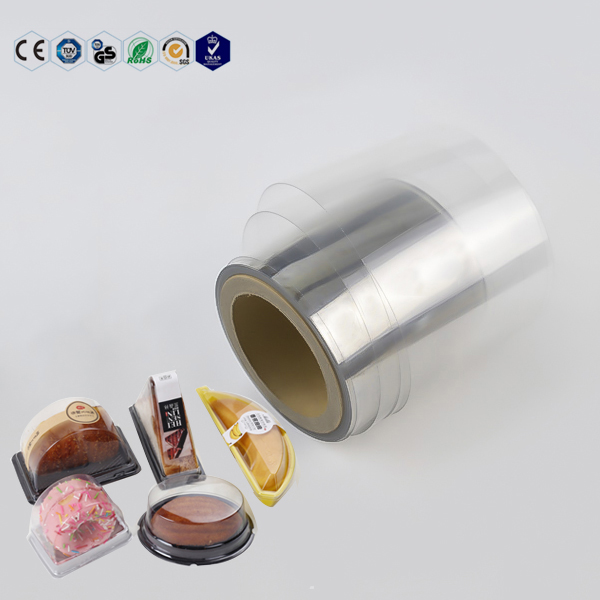
The packaging sector consumes a massive volume of extruded polymer films. Thermoforming applications for fresh fruit and vegetable containers rely heavily on this material. Optical clarity is paramount in retail environments, as consumers demand visible proof of product freshness. The material provides glass-like transparency without the associated weight or fragility of actual glass.
Gas and moisture barrier properties extend product shelf life significantly. The polymer restricts the transmission of oxygen (OTR) and water vapor (WVTR). This prevents premature spoilage, oxidation, and maintains food texture. Agricultural packaging also benefits from these barrier traits, protecting seeds, fertilizers, and sensitive organic compounds from environmental moisture during transit and storage.
Strict adherence to global food-contact compliance standards is non-negotiable. Quality films meet FDA, EFSA, and other international regulatory requirements. The material does not leach harmful plasticizers, phthalates, or unreacted monomers into consumable goods. This inert nature guarantees food safety across the entire supply chain.
To achieve optimal results during the thermoforming process, operators must follow strict setup procedures:
Verify the sheet gauge consistency across the entire web width to prevent uneven heating.
Set the upper and lower oven zone temperatures to achieve the optimal forming window (typically 120°C to 140°C for APET).
Adjust the plug assist timing and depth to ensure uniform material distribution in deep-draw cavities.
Calibrate the mold cooling circuit to rapidly drop the part temperature below the glass transition point before ejection.
Inspect the trimmed parts for flange thickness and optical clarity to confirm process stability.
Electrical engineering applications demand reliable dielectric materials. The polymer offers high dielectric strength, often exceeding 15 kV/mm, preventing electrical arcing and short circuits in densely packed components. Manufacturers use it extensively for wire wrapping, cable insulation, slot liners in electric motors, and transformer components. The film maintains its insulating properties even in fluctuating temperature environments and high-humidity conditions.
Advanced electronics utilize the material as structural substrates. Flexible printed circuits (FPCs) require a stable, heat-resistant base layer. The film provides the necessary dimensional stability during circuit printing, conductive ink curing, and soldering processes. Photovoltaic applications also depend on this polymer. Solar panel backsheets incorporate specialized grades to protect sensitive internal silicon cells from moisture ingress, UV radiation, and physical damage over decades of outdoor exposure.
The healthcare industry requires sterile, reliable packaging solutions. The material demonstrates excellent compatibility with standard sterilization protocols. It withstands Gamma irradiation and Ethylene Oxide (EtO) treatments without degrading, yellowing, or losing structural integrity. This ensures medical instruments, implants, and diagnostic equipment remain sterile until the moment of use in the operating theater.
Formation of rigid blister packaging relies on the polymer's thermoforming capabilities. Pharmaceutical companies use it to protect individual pill doses from moisture and physical crushing during transport. Sterile barrier systems for surgical instruments also utilize heavy-gauge films. The exceptional puncture resistance prevents sharp instruments like scalpels and trocars from breaching the sterile envelope during handling and storage.
Heavy industry leverages the material for surface protection and mechanical function. Functionality as release liners and thermal lamination films is widespread. The film serves as a protective coating for materials requiring extreme resistance to heat, abrasion, and harsh chemicals. It shields sensitive metal surfaces, architectural glass, and composite panels during manufacturing, shipping, and installation.
Machined applications derived from heavy-gauge rolls serve critical mechanical roles. Engineers design wear pads, bearings, bushings, and valve components from this tough polymer. Fluid manifolds and filler pistons utilized in food processing machinery benefit from its FDA compliance and low friction coefficient. The material replaces traditional metals in areas requiring corrosion resistance, weight reduction, and noise dampening.
Selecting the appropriate grade determines project success. You must map specific grades to your exact end-use requirements. Amorphous PET (APET) provides maximum optical clarity and ease of thermoforming for rigid packaging. Biaxially Oriented PET (BOPET) delivers superior tensile strength and barrier properties for flexible pouches and industrial laminates. Crystalline PET (CPET) offers enhanced high-temperature resistance, making it ideal for dual-ovenable food trays that must withstand microwave and conventional oven heating. Recycled PET (RPET) meets strict sustainability mandates by incorporating post-consumer resin without sacrificing baseline mechanical properties.
Material Grade |
Primary Characteristics |
Thermal Limit |
Ideal Industrial Applications |
|---|---|---|---|
APET |
High clarity, excellent thermoformability, impact resistant |
~70°C |
Retail blister packs, fresh food containers, clamshells |
BOPET |
High tensile strength, superior gas/moisture barrier |
~150°C |
Flexible pouches, electrical insulation, solar backsheets |
CPET |
High thermal stability, opaque appearance |
~220°C |
Microwave and conventional oven-safe food trays |
RPET |
Eco-friendly, variable clarity based on recycled content |
~70°C |
Sustainable packaging, non-food contact containers |
Machinery compatibility dictates dimensional requirements. Evaluating gauge and thickness consistency is critical. Variations in thickness cause uneven heating during thermoforming, leading to thin spots and part failure. In flexible packaging, gauge bands cause web breaks during high-speed printing and laminating. You must ensure roll width compatibility with specific slitting and converting equipment. Incorrect widths lead to excessive edge trim waste and reduced production efficiency.
Assessing surface treatments prevents downstream processing failures. Standard films often feature low surface energy, making ink adhesion and lamination difficult. Corona treatment increases surface tension (measured in dynes), enabling high-quality printability and strong adhesive bonds. Chemical coatings may be required for metallization processes or specialized barrier applications. Specifying a PET Plastic Roll with the correct surface preparation eliminates the need for costly inline priming stations and reduces the risk of delamination in the field.
Procurement must look beyond the initial purchase price per kilogram. Yield calculations determine true material efficiency. Transitioning from cost-per-weight to cost-per-square-meter provides a more accurate metric for production planning. Lighter gauge films may carry a higher premium per kilogram but yield significantly more usable area, ultimately reducing the cost per finished part.
Evaluating supplier reliability ensures uninterrupted production. You must assess minimum order quantities (MOQs) and lead times for custom roll dimensions. Reliable suppliers maintain consistent resin sourcing, strict quality control, and robust extrusion capabilities. Partnering with established manufacturers mitigates supply chain risks, ensures batch-to-batch consistency, and guarantees scalability as your production volumes increase.
High-speed converting lines introduce specific mechanical challenges. Managing static electricity build-up during rapid unwinding requires active intervention. The friction generated as the film leaves the roll creates high static charges that attract dust, compromising optical clarity and print quality. Installing ionizing bars, utilizing anti-static tinsel, and specifying films with internal anti-static additives mitigates this risk effectively.
Addressing cutting and slitting tool wear is another operational necessity. The inherent toughness and abrasion resistance of the polymer dulls standard steel blades quickly. Upgrading to carbide or diamond-tipped slitting knives extends tool life and maintains cut quality. Implementing regular maintenance schedules prevents ragged edges, angel hair, and excessive dust generation during the slitting process, which can contaminate downstream packaging operations.
Improper storage ruins otherwise perfect materials. The hygroscopic nature of the polymer demands strict environmental controls. Risks of moisture absorption lead to intrinsic viscosity (IV) loss during processing. When heated, trapped moisture causes the polymer chains to break down through hydrolysis, resulting in severe brittleness, loss of impact strength, and structural failure during thermoforming.
Establishing strict warehouse protocols is mandatory. Facilities must implement temperature and humidity control prior to processing. Keep rolls wrapped in their original moisture-barrier packaging until immediately before use. If exposure occurs, utilize desiccant drying systems to remove moisture before the material enters the extrusion or thermoforming heating zones. The dew point of the drying air must be strictly monitored to ensure effective moisture removal.
While highly versatile, this polymer is not the universal solution for every engineering challenge. Comparative analysis helps identify when alternative substrates perform better. Specify Polycarbonate (PC) when applications demand extreme impact resistance, bullet-resistant glazing, or higher continuous operating temperatures. Choose Polyvinyl Chloride (PVC) when specific chemical exposures, aggressive solvent bonding requirements, or stringent flame retardancy standards exist. Opt for Polypropylene (PP) for lower-cost, lower-density needs where absolute optical clarity is secondary to budget constraints and high flexural fatigue resistance is required.
Request Material Data Sheets (MDS) and Certificates of Analysis (CoA) to verify technical specifications and regulatory compliance.
Order sample rolls for pilot line testing to confirm machinability, gauge consistency, and thermoforming performance on your specific converting equipment.
Conduct a thorough audit of the supplier’s quality management system, focusing on resin sourcing and extrusion tolerance controls.
Implement strict environmental controls and desiccant drying protocols in your storage facilities to prevent moisture-related processing failures.
A: Standard PET (APET) is extruded and rapidly quenched without stretching, offering high optical clarity and excellent thermoforming capabilities for rigid packaging. BOPET undergoes biaxial orientation, meaning machinery stretches the film in both the machine and transverse directions. This stretching aligns the polymer chains, significantly increasing tensile strength, thermal stability, and gas barrier properties, making BOPET ideal for flexible packaging and electrical insulation.
A: Standard amorphous grades soften around 70°C and are unsuitable for high heat. However, Crystalline PET (CPET) is specifically engineered to withstand higher temperatures, often up to 220°C. For sustained high-temperature industrial applications, engineers must specify CPET or heavily oriented BOPET grades to prevent dimensional distortion, shrinkage, and catastrophic material failure.
A: Yield is calculated by converting the material's specific gravity and thickness into a coverage area metric. Instead of measuring by weight, divide the total weight of the roll by the product of the film's density (typically 1.33 g/cm³) and its gauge. This calculation provides the total square meters available, allowing procurement teams to execute accurate cost-per-part calculations.
A: Commercial thicknesses vary widely based on the manufacturing process and end-use application. Thin BOPET films range from 12 to 50 microns for flexible packaging and laminations. Rigid APET rolls used for thermoforming typically range from 150 microns (0.15mm) up to 1000 microns (1.0mm) or more for heavy-duty clamshells, blister packs, and machined mechanical components.
A: Yes, standard grades will yellow, haze, and become brittle after prolonged exposure to ultraviolet light. For outdoor applications like solar panel backsheets, agricultural films, or exterior signage, manufacturers must incorporate UV stabilizers directly into the resin during extrusion or apply specialized UV-blocking coatings to ensure long-term mechanical durability and optical clarity.
A: Store rolls in a climate-controlled warehouse with low ambient humidity. Keep the material sealed in its original moisture-barrier packaging until it is ready for immediate processing. If the material absorbs ambient moisture, it must undergo thorough desiccant drying before heating to prevent intrinsic viscosity loss, hydrolysis, and severe brittleness during the forming process.
A: Yes, it is highly recyclable and carries the universal resin identification code #1. Clean industrial scrap, edge trim, and post-consumer packaging can be ground, washed, and reprocessed into RPET. This recycled material is widely used to manufacture new packaging, textile fibers, and strapping, directly supporting corporate sustainability and circular economy initiatives.


