


Views: 0 Author: Site Editor Publish Time: 2026-08-19 Origin: Site


In high-volume manufacturing and packaging, selecting the correct polymer substrate dictates product durability, regulatory compliance, and production efficiency. Procurement and engineering teams frequently face the decision between PET and PVC for continuous web-fed processes. While historically dominant, PVC faces increasing environmental scrutiny. This reality forces manufacturers to evaluate if transitioning to PET is technically viable for their specific tooling and application.
This guide provides a comprehensive, side-by-side technical evaluation of these materials. We analyze chemical composition, mechanical properties, processing behaviors, and production scalability to facilitate an evidence-based material selection. You will understand how each substrate interacts with existing machinery, how they perform under environmental stress, and what adjustments are necessary to optimize yield.
Chemical & Structural Differences: PVC contains chlorine and relies on plasticizers for flexibility, whereas a PET roll is a polyester synthesized from the polymerization of terephthalic acid and ethylene glycol, offering inherent rigidity and stability without halogens.
Visual & Mechanical Performance: A clear PET roll delivers superior optical clarity and a naturally polished surface finish compared to PVC, making it the preferred choice for high-visibility retail packaging and display applications.
Environmental & Regulatory Compliance: PET is highly recyclable (Resin Identification Code #1) and globally accepted, whereas PVC faces stringent regulatory restrictions due to toxic byproducts (dioxins) released during degradation or incineration.
Production Viability: Transitioning from PVC to PET requires evaluating existing thermoforming and cutting equipment, as PET's higher thermal conductivity and rigidity may necessitate tooling adjustments.
Polyethylene terephthalate (PET) is a thermoplastic polymer resin belonging to the polyester family. Manufacturers synthesize it through the step-growth polymerization of terephthalic acid and ethylene glycol. This specific chemical structure provides a stable, robust backbone that requires no external plasticizers to maintain its physical integrity. The complete absence of halogens and volatile organic compounds (VOCs) in its base formulation makes it inherently stable across various high-speed processing environments.
Producing a PET Roll typically involves continuous flat-die extrusion. The raw polymer resin is dried to remove trace moisture, melted in an extruder, and forced through a flat die. The resulting polymer melt is extruded directly onto a highly polished, water-cooled chill roll. Rapid quenching drops the temperature of the melt instantly. This sudden cooling prevents the formation of crystalline structures (spherulites), trapping the polymer in an amorphous state. This rapid thermal transition is exactly what gives the material its signature glass-like transparency.
Because the surface finish is dictated entirely by the smoothness of the chill roll during the initial extrusion phase, the resulting web features a naturally polished, high-gloss surface. Operators do not need to apply secondary mechanical finishing or chemical polishing to achieve optical clarity. The intrinsic viscosity (IV) of the resin determines the final mechanical strength of the roll, with higher IV grades selected for deep-draw thermoforming applications.
Polyvinyl chloride (PVC) relies on a completely different chemical architecture. It is a vinyl polymer constructed from repeating vinyl chloride units, making the chlorine atom a core structural element of the polymer chain. In its raw, unplasticized state (uPVC), the material is exceptionally rigid, brittle, and difficult to process into thin continuous webs. To achieve the flexibility required for roll-fed packaging applications, manufacturers must blend the base resin with significant volumes of chemical additives.
These additives primarily include plasticizers, such as phthalates or adipates, which lodge between the polymer chains to increase free volume and flexibility. The formulation also requires heavy metal or organic heat stabilizers to prevent the material from degrading during processing, alongside various internal and external lubricants.
The manufacturing process for PVC webs often utilizes mechanical calendering rather than simple flat-die extrusion. The compounded resin is heated into a viscous mass and passed through a series of massive, heated counter-rotating rollers. These rollers squeeze and stretch the material down to the desired gauge. The surface finish of PVC heavily depends on the physical texture of the final calendering rolls. Unlike PET, which achieves a high gloss naturally through quenching, PVC often requires mechanical manipulation. If a specific texture or high-clarity level is needed, the calendering rollers must be specially sanded, polished, or plated. This reliance on mechanical finishing is similar to Polycarbonate (PC), which also requires specialized roller textures to alter surface properties.
Optical performance is a primary deciding factor for consumer-facing applications. Light transmission rates and haze percentages dictate how clearly a product is visible through its packaging. A Clear PET Roll consistently achieves light transmission rates exceeding 88%, with haze levels often dropping below 1%. This provides exceptional, distortion-free visibility that mimics the appearance of glass.
PVC can achieve high clarity, but it often exhibits a slight blue or yellow tint depending on the specific stabilizer package used during compounding. Over time, PVC is highly susceptible to yellowing and degradation when exposed to ultraviolet (UV) light. The UV energy breaks the chlorine-carbon bonds in a process called dehydrochlorination, causing discoloration and embrittlement. PET, particularly when formulated with specific UV inhibitors, maintains its optical integrity significantly longer under direct fluorescent lighting or sunlight exposure.
Optical & Chemical Property | PET Roll | PVC Roll |
|---|---|---|
Light Transmission (ASTM D1003) | >88% (High Clarity) | 80% - 85% (Slight tint possible) |
Haze Percentage | < 1% | 2% - 4% |
Halogen Content | None | High (Chlorine) |
UV Stability | Excellent (with standard additives) | Prone to rapid yellowing |
Plasticizer Requirement | None | High (for flexibility) |
Mechanical strength directly impacts material yield and packaging durability. PET offers superior tensile strength and a higher Young's Modulus (inherent rigidity) compared to PVC at equivalent gauges. This structural advantage allows engineers to design packaging with thinner walls while maintaining the exact same crush resistance and load-bearing capacity during transit.
Impact resistance varies significantly across temperature ranges. Standard amorphous PET maintains excellent impact strength at room temperature but can become brittle in sub-zero environments unless specifically modified into variants like APET or PETG. PVC formulations can be heavily plasticized to improve cold-crack resistance, making it a historical favorite for supply chains exposed to extreme winter conditions. However, advanced PET blends now match or exceed PVC's cold-weather performance without relying on leachable plasticizers.
When evaluating tear resistance, PET exhibits a high initiation threshold. It is difficult to start a tear in a PET web. However, once a tear initiates, it propagates quickly. PVC tends to stretch and yield before tearing, which can be advantageous in certain flexible pouch applications but detrimental in rigid blister packs where structural integrity is paramount.
Thermal stability dictates how a material behaves during thermoforming, sealing, and end-use. PET has a glass transition temperature (Tg) around 70°C to 80°C and a melting point near 250°C. This provides a wide, predictable processing window for thermoforming. PVC has a slightly higher Tg (around 80°C to 85°C) but begins to degrade and release hydrochloric acid gas well before it reaches a true melting state, narrowing its processing window and requiring precise temperature control to prevent burning.
Barrier properties are critical for extending the shelf life of food and pharmaceuticals. PET provides excellent resistance to oxygen transmission (OTR) and moisture vapor transmission (MVTR). It effectively blocks ambient gases from compromising the packaged contents. PVC offers decent moisture barriers but falls short in oxygen barrier performance compared to PET.
For applications requiring extreme heat resistance, such as microwaveable containers, or exposure to highly aggressive industrial chemicals, neither PET nor PVC may suffice. In those specific scenarios, evaluating Polypropylene (PP) or specialized high-density polyethylene (HDPE) is necessary.
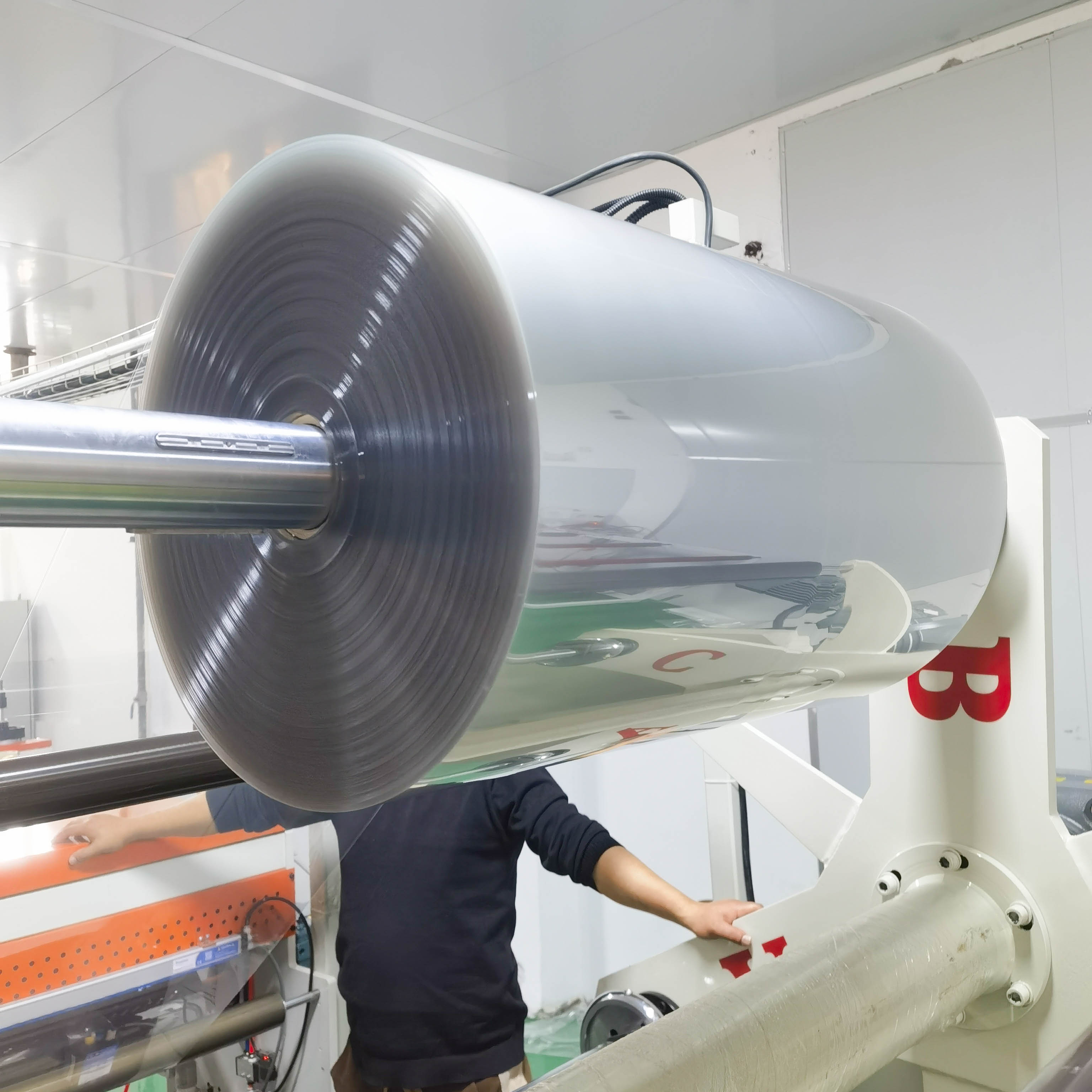
Material selection carries heavy environmental implications. The recycling infrastructure for PET is the most established globally. Post-consumer PET is routinely recovered, washed, ground into flake, and re-extruded into rPET (recycled PET) for use in new packaging, textiles, and strapping. This closed-loop system significantly reduces reliance on virgin fossil fuels. The process often involves solid-state polycondensation (SSP) to rebuild the polymer chain length and restore the intrinsic viscosity of the recycled material.
It is necessary to distinguish between recyclability and biodegradability. Neither traditional PET nor PVC is readily biodegradable in natural environments. Therefore, robust recyclability is the primary metric for measuring environmental impact. PVC presents massive challenges in municipal recycling streams. Its high chlorine content and the presence of heavy metal stabilizers or phthalate plasticizers contaminate recycling batches.
A very small amount of PVC can ruin an entire batch of recycled PET. When heated during the PET recycling process, PVC degrades and releases hydrochloric acid. This acid acts as a catalyst, rapidly breaking down the PET polymer chains, drastically lowering the melt viscosity, and causing severe yellowing or blackening of the batch. Consequently, most material recovery facilities utilize near-infrared (NIR) optical sorters to actively detect and reject PVC from the recycling stream.
Global compliance standards heavily favor halogen-free materials. Frameworks like REACH in Europe and RoHS directives strictly monitor the additives used in plastic manufacturing. PET easily complies with these regulations and holds broad FDA approval for direct food contact. The absence of migrating plasticizers makes it biologically inert, ensuring no chemicals leach into food or medical products.
PVC faces severe regulatory headwinds. The primary concern lies in its end-of-life phase. When PVC is incinerated—a common waste management practice in many regions—it releases hydrochloric acid and highly toxic dioxins and furans into the atmosphere. These emissions pose severe occupational hazards and environmental risks. PET features a much cleaner combustion profile, breaking down primarily into carbon dioxide and water vapor when subjected to high-temperature incineration.
Web-fed thermoforming requires a material that heats evenly, stretches predictably, and releases cleanly from molds. PET has become the absolute standard for food clamshells, medical device trays, and retail blister packs. Its predictable shrinkage and excellent deep-draw capabilities allow for complex cavity designs with uniform wall thickness. The high clarity ensures consumers can inspect the product, while FDA compliance guarantees safety for direct food contact.
In medical packaging, PETG (glycol-modified PET) is frequently used for rigid trays that must undergo ethylene oxide (EtO) or gamma irradiation sterilization. It maintains its physical properties and clarity post-sterilization, complying with ISO 11607 standards for sterile barrier systems. PVC was once the default for blister packaging due to its easy sealing characteristics. However, the shift away from halogens in the medical and food sectors has largely relegated PVC to non-food retail blisters and hardware packaging where regulatory scrutiny is lower.
Surface energy, measured in dynes, dictates how well inks and adhesives bond to a substrate. Both materials accept flexographic and UV lithographic printing well. PET often requires an inline corona treatment or a specialized topcoat to raise its surface energy and optimize ink adhesion on continuous rolls. In the labeling sector, PET dominates high-performance applications. Labels subjected to high heat, UV exposure, or chemical washdowns rely on PET's dimensional stability. Standard vinyl (PVC) labels tend to shrink, curl, or degrade under similar stress.
For outdoor signage, PVC maintains a historical dominance. Its inherent weatherability and flexibility make it ideal for large-format banners and vehicle wraps. However, specialized UV-stabilized PET grades are aggressively competing in this space, offering a more rigid, recyclable alternative for flat signage.
In the shrink film market, directional shrinkage is the defining metric. PETG offers superior performance in high-shrink contour applications. It can achieve shrink ratios up to 75-80%, allowing it to conform tightly to complex bottle shapes with extreme curves. PVC shrink films generally max out around 40-50% shrinkage, limiting their utility on highly contoured containers.
Evaluating material efficiency requires looking beyond the initial weight of the resin. Because PET possesses higher tensile strength and structural rigidity than PVC, engineers can frequently down-gauge the material. Down-gauging means running a thinner roll through the thermoformer or printing press without sacrificing the structural integrity of the final part.
Using a thinner gauge increases the total linear footage per roll. This directly improves the yield-per-roll, meaning you produce more individual units from the same weight of material. This efficiency reduces roll changeovers, decreases machine downtime, and optimizes warehouse storage space. PVC's lower rigidity often forces manufacturers to use thicker gauges to achieve the same crush resistance, resulting in fewer parts per roll.
Furthermore, the specific gravity of the materials plays a role in yield calculations. PET has a specific gravity of approximately 1.33 to 1.38 g/cm³, while rigid PVC ranges from 1.30 to 1.45 g/cm³ depending on the additive load. When combined with the ability to down-gauge, the area yield (square meters per kilogram) of PET frequently outperforms PVC, maximizing production throughput.
Transitioning substrates impacts existing machinery. Die-cutting wear is a primary consideration. PET is physically harder and more rigid than plasticized PVC. When running PET through rotary or flatbed die-cutters, the blades experience accelerated wear. Maintenance teams must adjust sharpening schedules or invest in hardened steel rule dies to maintain clean cuts. Using center-bevel rules rather than side-bevel rules can help distribute the cutting force and prevent angel hair (plastic dust) generation during high-speed stamping.
Heating elements also require evaluation. PET absorbs thermal energy differently than PVC. Thermoforming PET efficiently often necessitates upgrading oven banks. Standard calrod heaters may struggle to penetrate the PET web evenly. Upgrading to quartz or ceramic heaters provides the specific infrared wavelengths needed to heat PET rapidly and uniformly, preventing cold spots and webbing during the forming cycle.
Running a new substrate on legacy equipment introduces immediate process risks. The most common issue is inadequate heat distribution. If the PET web does not reach its optimal forming temperature uniformly, the material will resist the mold, leading to webbing, incomplete detail replication, or excessive thinning in deep-draw corners.
Mitigating this risk requires a systematic recalibration of the thermoforming line. Operators must adjust oven temperatures, mapping the heat profile across the entire web width. Dwell times (the duration the material sits in the oven) must be shortened, as PET can crystallize and turn milky white if overheated. Implementing multi-zone heating controls allows for precise temperature management, ensuring the web is pliable but not sagging before it hits the mold.
Thermoforming Defect | Potential Cause with PET | Mitigation Strategy |
|---|---|---|
Webbing / Bridging | Sheet is too cold or unevenly heated. | Increase oven temperature; check for failed ceramic heater zones. |
Milky White Appearance | Overheating causing rapid crystallization. | Reduce oven dwell time; lower heater temperatures. |
Poor Detail Replication | Inadequate vacuum pressure or cold mold. | Clear vacuum holes; increase mold temperature slightly. |
Angel Hair during Cutting | Dull die blades or incorrect bevel angle. | Switch to hardened steel center-bevel rules; replace make-ready tape. |
Roll storage presents distinct physical challenges. A significant risk with smooth, high-gloss materials is blocking. Blocking occurs when the layers of the roll stick together under tension and ambient heat, making it impossible to unwind the web without tearing or stretching the plastic.
To mitigate blocking and material degradation, facilities must implement strict climate-controlled storage. Rolls should be kept away from direct sunlight and extreme humidity. Manufacturers often apply a microscopic layer of silicone coating or integrate internal anti-block additives during the extrusion process. These modifications create microscopic surface separation, allowing the roll to unwind smoothly at high speeds without compromising optical clarity.
PVC remains a functional choice for specific industrial and outdoor applications where inherent weatherability and flexibility are required. However, for modern packaging, printing, labels, and consumer-facing applications, PET is the objectively superior material. Its exceptional optical clarity, high structural integrity, and strict alignment with global sustainability mandates make it the standard for forward-looking manufacturing.
Choose PVC if you operate in specialized industrial sectors requiring specific flexibility profiles or long-term outdoor banner signage. Choose PET if your success criteria include high-visibility retail packaging, strict food-contact compliance, material down-gauging for yield efficiency, or meeting corporate environmental goals.
To execute a successful transition or optimize your current material usage, take the following actions:
Audit your current thermoforming ovens and die-cutting stations to identify necessary tooling upgrades for processing rigid substrates.
Request detailed material data sheets (MDS) from suppliers to verify the specific glass transition temperatures and shrinkage rates of their PET grades.
Initiate a controlled pilot run on a single production line to calculate actual yield improvements and monitor blade wear before scaling facility-wide.
Evaluate your warehouse climate controls to ensure incoming rolls are protected from extreme temperature fluctuations that cause blocking.
A: Yes, but it requires process parameter adjustments. PET requires different heating profiles and dwell times to prevent crystallization. Its higher rigidity may also necessitate upgrading cutting dies to hardened steel to prevent accelerated blade wear and ensure clean edges.
A: Generally, no. Because PET has a higher inherent tensile strength and rigidity than PVC, you can often use a thinner gauge of PET to achieve the exact same crush resistance and structural integrity as a thicker piece of PVC.
A: PET is highly recyclable, widely accepted in municipal recycling programs, and does not contain halogens. PVC releases toxic dioxins and hydrochloric acid if incinerated and is extremely difficult to recycle due to its complex additive profile and chlorine content.
A: A clear PET roll provides superior, glass-like optical clarity and a naturally polished surface directly from extrusion. PVC can sometimes exhibit a slight blue or yellow tint and often requires mechanical processing on calendering rolls to achieve a smooth finish.
A: PET is ideal for clarity and rigidity. Polypropylene (PP) is selected when higher heat resistance or chemical resistance is required, though it lacks PET's clarity. Polycarbonate (PC) offers extreme impact resistance but requires mechanical calendering for surface finishes and is harder to process.
A: Yes. PET, specifically modified PETG used for shrink sleeve applications, offers a much higher maximum shrink percentage—up to 75% to 80%. This allows it to conform to highly contoured shapes. PVC shrink films typically max out around 40% to 50% shrinkage.


